


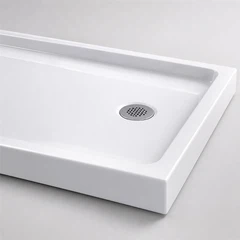



The best bathing experiences are the ones spent on a quality bathtub in a relaxing evening. But the story starts to change when your bathtub becomes faulty.
Admit it or not, one of the problems we always notice about our bathtubs is its drain. So buying a quality drain is not out of the picture.
You might ask "what is the standard for bathtub drains?" when buying one. Lucky for you, we're here to guide you with finding the most suitable drain for your tub!
The Standardized and Non-Standard Bathtub Drain Diameter
The standard measurement for a bathtub drain diameter is 1 and a half inches. Meanwhile, the non-standard measurement is 1 ⅛ inches.
Don't be overwhelmed with these sizes. The diameter we're referring to is the measurement of point A to point B in the vertical stretch of a tub drain.
You need to be aware of these sizes so you can assist the plumbers. Especially when you're in need of a new drain in the near future.
And it's not just for plumbers. When you're interested in doing your bathtub fix-ups yourself, you can just easily follow the standard sizing required for your tub.
These days, most homeowners usually opt to know the right measurements for everything to save money in doing repairs. For instance, there are a wide array of online videos on how to replace tub drains properly.
It's a plus if you're familiar with the standard size already.
The Non-Standard Drain Size
You may also be curious about the "non-standard" size we're referring to. The non-standard size of bathtub drain is found in older, antique bathtubs.
They slightly have smaller drains, so the sizing changes a little bit into 1 ⅜ inches. Nothing much, but it's helpful when you prefer a vintage style bathtub for yourself.
There's also another solution if you want an antique bathtub aesthetic yet avoid the hassle of finding a different tub measurement.
Try to use a reducer washer where you can still attach a smaller drain hole to a 1.5-inch piping.
Rest assured that the market will always offer the standard size of tub drains. You don't have to worry about getting confused because it's unlikely to see different drain measurements today.
But even though there's a standard size for drains, there are still a great variation of styles that you can choose from. Check out these types of bathtub drains in the next section!
Top 4 Most Common Types of Bathtub Drains
All bathtub drains have the same function. It's to hold the water in a tub and drain it when you're done with your bathing relaxations.
Since they pretty much have the same purpose, it will not hurt to choose a style that will serve you the best. Yes, you can tell that it mostly serves your modular bathroom dreams.
But don't get me wrong. Even though bathtub drains have similar functionalities, they still differ in how they operate. So choose a type that's handy and easy to use!
Let's take a closer look at some of these bathtub drain types below.
1. Lift And Turn
The name stands for itself. In fact, a lift and turn mechanism is one of the most common bathtub drains we have nowadays.
It's easy. You just have to lift the stopper to fully open the drain and turn it to close it. As for homeowners, it's user-friendly and straightforward.
Aside from its ease-of-use, this type is also durable and trust-worthy. Most lift and turn drains are made of metals or high-quality plastics for longevity. And who wouldn't want a drain that has a strong resistance to wear and tear, right?
Another perk of this type is its easy-peasy installation process! It doesn't require complicated tools to set up.
It's also easy to clean. Imagine, you can simply remove any hair or debris stuck in the drain without much effort.
2. Toe Touch
A toe touch tub drain is almost similar to the previous type we discussed known as lift and turn in terms of look and function. But, of course, the only difference is that the drain opens and closes if you push it with your toe or foot.
You don't have to make extreme efforts to activate the drain. This is specifically helpful with individuals who have problems in mobility. It keeps homeowners from bending over in opening and closing a drain.
This type carries a spring-loaded mechanism inside. That's why it's responsive to your press and touch. Completely hands-free and user-friendly!
Toe touch drain is also integrated with a stopper. Plus, the materials for most toe touch drains are resistant to corrosion from cleaning agents and water damage.
3. Trip Lever
The name trip lever is inspired by the lever located on the overflow plate. You only need to flip the lever up or down to open or close the drain.
The overflow plate is the cover plate on the side of the tub, usually positioned below the faucet. It contains the trip lever mechanism and may have openings for overflow drainage.
Plus, many trip lever drains are equipped with a lift-and-turn stopper connected to the linkage. This stopper can be manually lifted and turned to either close or open the drain.
What I also like about this is that the linkage connecting the trip lever to the drain stopper is often adjustable, allowing for fine-tuning to ensure proper operation.
Overall, Trip lever drains are designed to be compatible with standard bathtub drain openings, making them suitable for various types of bathtubs.
4. Chain and Plug
A chain and plug bathtub drain is a traditional and simple type of drain mechanism. The drain typically consists of a plug attached to a chain. The chain is connected to an overflow drain plate, which is the cover plate on the side of the tub below the faucet.
In addition, the plug is manually inserted or removed from the drain by pulling or releasing the chain. This simple mechanism allows for easy and straightforward operation.
Its overflow drain plate often includes openings to allow excess water to drain through the overflow pipe, preventing accidental overfilling of the bathtub.
What more, chain and plug drains are often cost-effective compared to more complex drain mechanisms.
Thoughts To Remember
In conclusion, the standardized measurement of 1 and a half inches is the norm for contemporary tubs, while the non-standard 1 ⅛ inches is commonly found in older, antique bathtubs.
Familiarizing yourself with these sizes not only aids professional plumbers but also empowers homeowners to undertake DIY fix-ups, potentially saving money on repairs!


