


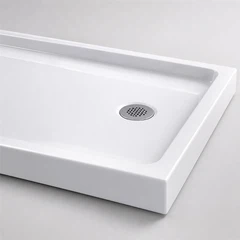



There are two types of bathtub placement: free-standing and embedded.
The free-standing bathtub is to put the bathtub directly on the bathroom floor, and the inside and outside are smooth and clean, and there is no need to lean against the wall or put it in the bathroom separately. Free-standing bathtubs have certain requirements for space and need to have a certain floor height and area.
Built-in bathtub means that the bathtub is embedded in the ground or other objects when it is installed. The built-in bathtub is divided into wall built-in and central built-in.
a. Built-in against the wall is a traditional bathtub, which needs to be built.
b. The central built-in bathtub refers to the bathtub that is not against the wall but embedded under the ground.
The built-in bathtub should be installed with a distance of at least 2mm from the wall to prevent the surface of the bathtub from cracking during vibration. In order to prevent mildew, try to add anti-mildew silicone to the edge of the bathtub. If there are elderly and children at home, it is recommended to install a built-in bathtub for easy access and high safety performance.
Matters needing attention:
a. The location of the inlet and outlet and the drainage pipe are reserved. The drainage pipe can be arranged under the cylinder. The cold and hot water are determined according to the style and model of the bathtub. It is recommended to order the style in advance.
b. If you have a bathtub, you must have a bathtub cover, which can keep the water warm when you take a bath, prevent dust when not in use, and even put a book or ipad on it to read.
c. The waterproof treatment method inside the bathtub structure; if the water leaks below the bathtub layer, it will not help if there are inspection openings, and the bathtub must be removed and re-arranged.


