


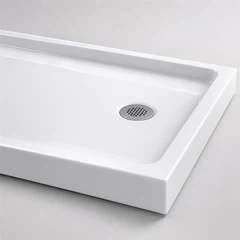



A shower pan is the floor component or waterproof assembly that collects shower water and channels it to the drain. Doors and wall tiles tend to get more attention during a renovation, but the pan and its connections help keep water out of the floor and walls.
For a bathroom renovation, that means checking more than the visible finish. The pan needs to fit the opening, connect to the drain, and work with the wall waterproofing. The same checks apply when buying bases for a hotel or a housing development, where one specification error can affect many bathrooms.
Here is how shower pans work, how the common materials differ, and what to check before ordering.
What Is a Shower Pan?
A shower pan forms the waterproof floor of a shower, collecting water and directing it toward the drain.
It may be a ready-made acrylic, fiberglass, or composite unit. In a tiled shower, the same term can describe the waterproof assembly beneath the tiles rather than the surface you stand on.
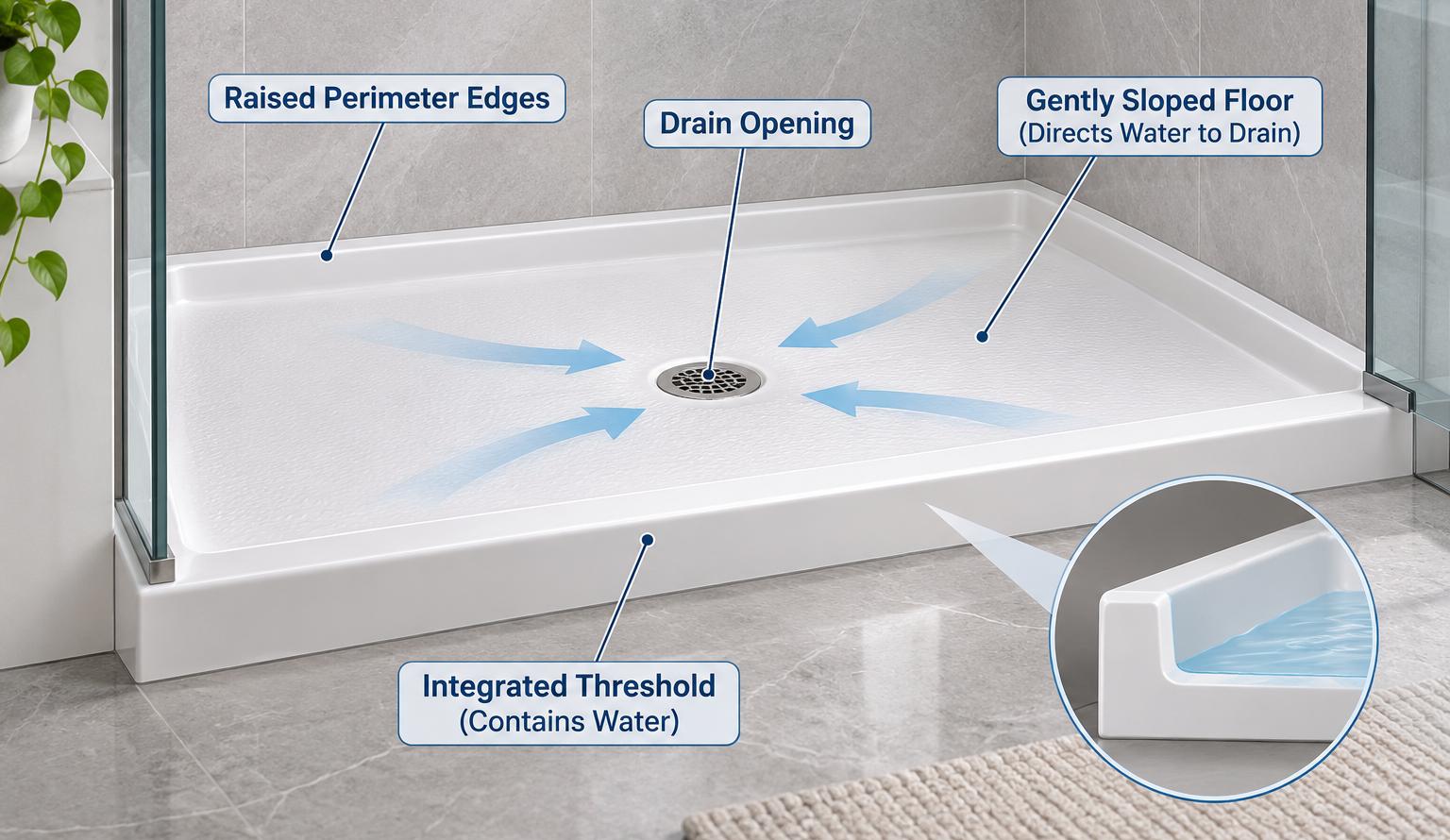
Most prefabricated pans have a sloped floor and a drain opening. Some also include perimeter flanges or a raised threshold. The pan is built for repeated exposure to water, but it still needs a compatible drain connection and properly finished wall waterproofing to protect the structure below.
What Does a Shower Pan Do?
Directs water toward the drain
The floor slopes toward the drain to carry water away. Recurring puddles make the surface harder to clean and may point to a drainage or installation problem.
Helps protect the subfloor
Leaks beneath a shower can damage the subfloor and nearby construction. A correctly installed pan helps keep that area dry as part of the waterproofing system. Poor wall seals or an incorrectly fitted drain can still let water through.
Provides a stable shower floor
How firm a pan feels underfoot depends partly on its construction and the support beneath it. Without the specified support, a unit may flex too much and develop problems over time.
Helps contain water
Where fitted, raised thresholds and perimeter flanges help contain water at the edges. They work together with the enclosure, door seals, and wall-to-base connections.
Shower Pan vs. Shower Base: What's the Difference?
In ready-made shower catalogs, shower pan and shower base often describe the same product. Installers may use the terms differently, especially when discussing a tiled shower, so check what the supplier actually includes.
|
Term |
Common meaning |
|
Shower pan |
Shower floor or waterproof floor assembly |
|
Shower base |
Often a prefabricated shower floor unit |
|
Shower pan liner |
Waterproof membrane used in certain tiled shower systems |
For traditional tile construction, a pan may mean the waterproof system below the tiles, including a sloped mortar bed, membrane, and compatible drain assembly. A catalog listing for an acrylic shower pan, on the other hand, may be identical to a listing for an acrylic shower base.
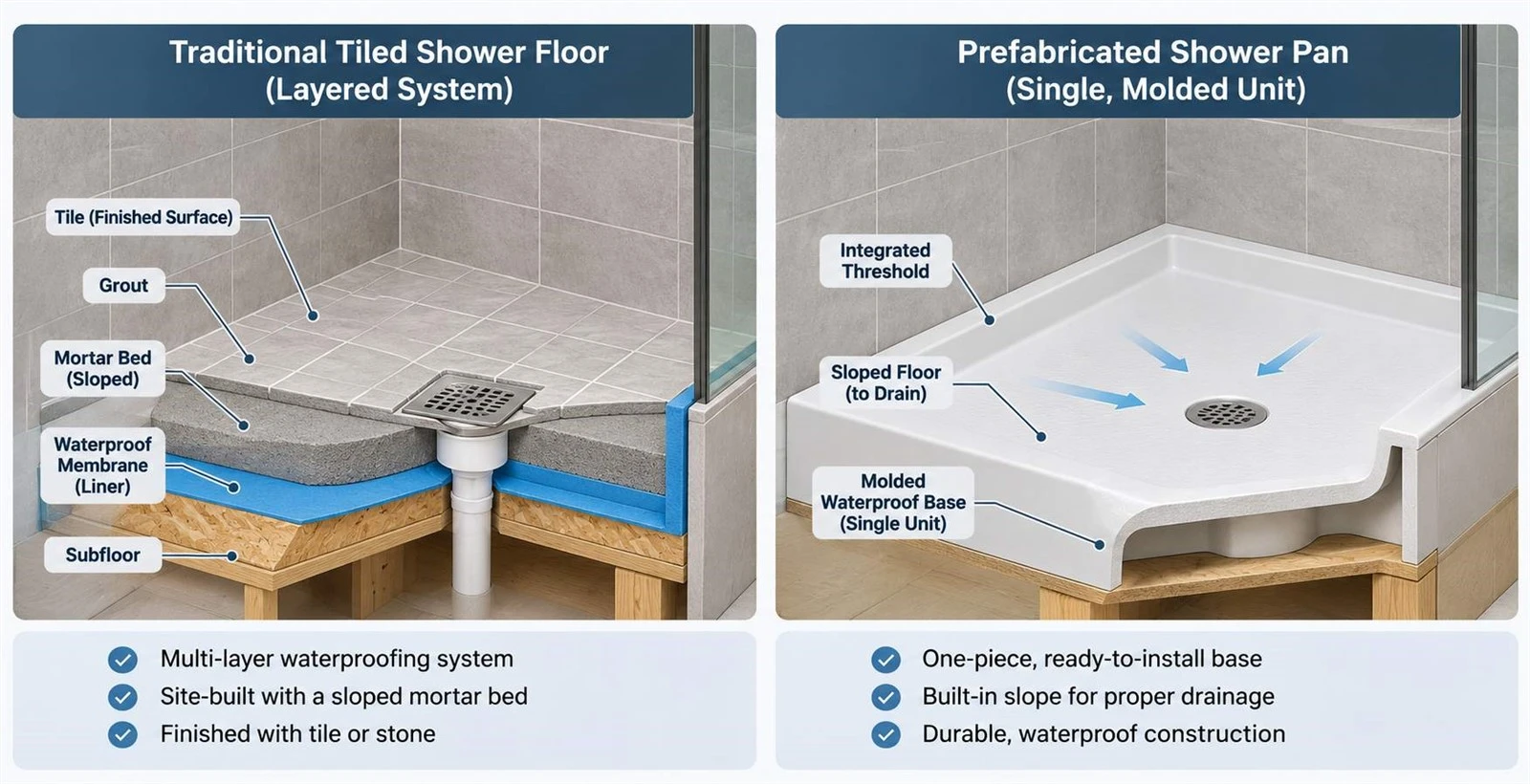
Before ordering, establish whether the item is a finished shower floor or a component that needs tiling. That distinction affects both the materials you need and the installation work.
What Are the Different Types of Shower Pans?
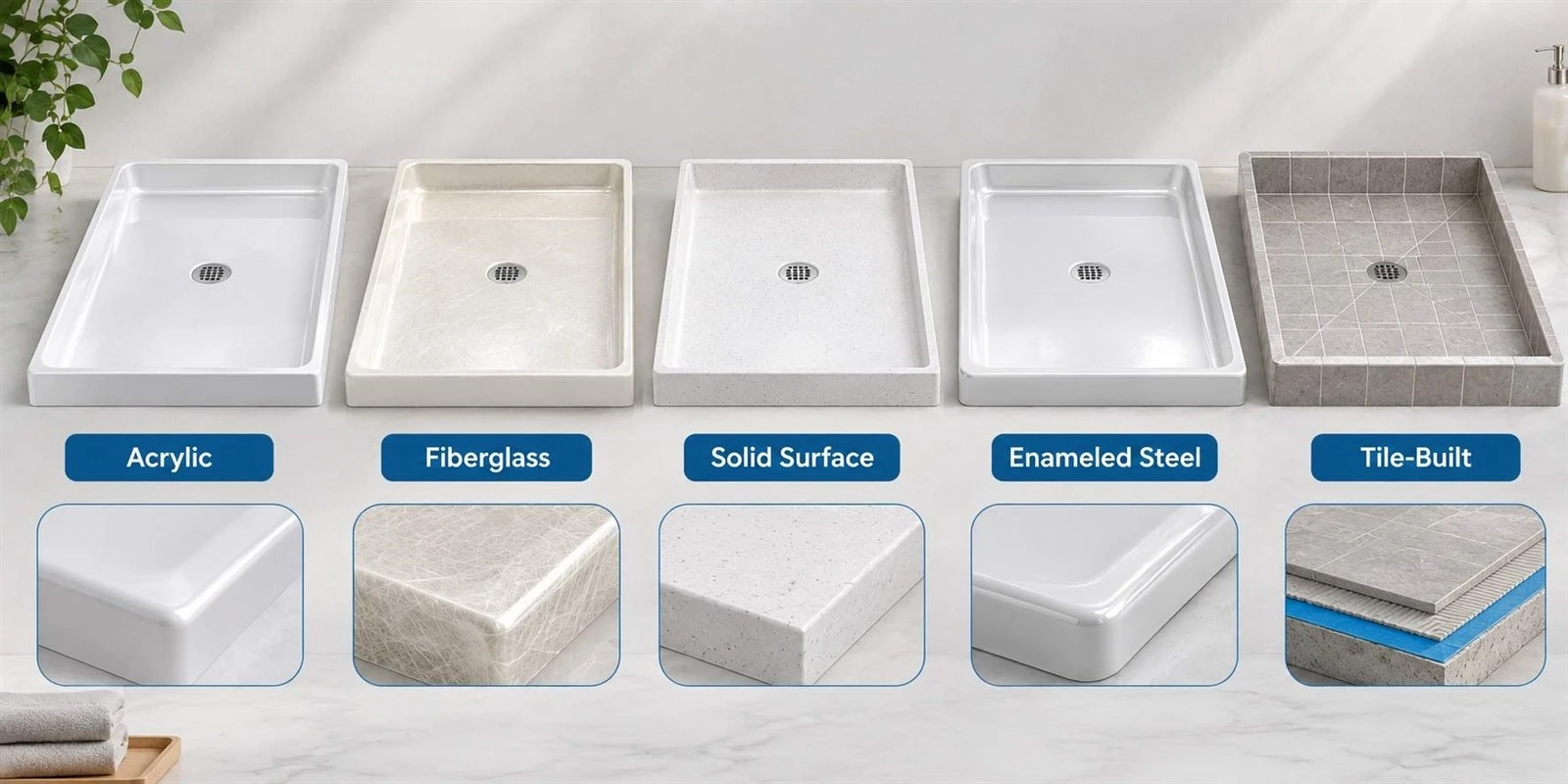
Acrylic shower pans
Acrylic pans are common in residential bathrooms and apartment renovations. They usually have a smooth, nonporous finish and come in a range of standard shapes and sizes. They are relatively light to handle, and routine cleaning is straightforward.
Check the support instructions before installation. Acrylic pans vary in reinforcement and underside construction; the visible surface thickness does not tell you how the whole unit is built. Use the recommended cleaning products and avoid abrasives that could damage the finish.
Fiberglass shower pans
Fiberglass pans generally consist of resin reinforced with glass fibers, often topped with a protective coating. Buyers often consider them when handling weight and initial cost matter.
The finish can show wear with use. Reinforcement, manufacturing quality, and installation affect how a pan performs, so assess the specific model rather than judging it by the fiberglass label alone.
SMC composite shower pans
SMC stands for Sheet Molding Compound. This composite typically contains resin, reinforcing fibers, and fillers, pressed into shape through compression molding. The process allows repeated production of defined shapes and surface patterns.
An SMC base may have a rigid structure, molded texture, and consistent dimensions, depending on its formulation and design. For distribution or multi-unit projects, check those details in the model specifications. Ask for test documentation for load capacity and slip resistance; the material name alone does not establish either.
Solid surface shower pans
Solid surface pans use engineered mixtures, often containing resins and mineral fillers. Their substantial appearance and uniform finish can suit contemporary bathroom designs.
Weight needs attention: some solid surface models are heavier than lightweight prefabricated pans. Check handling, floor support, and installation requirements, particularly for hotel renovations or rooms with restricted access.
Custom tiled shower pans
A custom tiled pan combines a waterproof floor system with a tile or stone finish. It gives you more freedom over the layout when a standard prefabricated pan will not fit.
The installer must coordinate the slope, waterproofing, and drain details. Tile and grout are the finish; they do not replace the waterproofing beneath them.
Shower pan material comparison
|
Material |
Main consideration |
Typical application |
|
Acrylic |
Smooth finish and routine cleaning |
Residential bathrooms |
|
Fiberglass |
Lightweight, cost-conscious options |
Standard renovations |
|
SMC |
Molded composite construction |
Residential and project installations |
|
Solid surface |
Design finish and handling weight |
Hotels and modern residences |
|
Tile |
Layout flexibility |
Custom bathroom designs |
Choose by the specific product and the work it requires. Material is only part of the decision; installation conditions, cleaning needs, and total project cost also matter.
How to Choose the Right Shower Pan
Check the dimensions
Common North American nominal sizes include 32 × 32, 36 × 36, 48 × 36, and 60 × 30 inches. Availability varies by manufacturer. Measure the actual opening and compare it with the product drawing, allowing for wall finish thickness during a renovation. A nominal size alone is not enough to confirm the fit.
Confirm the drain location
Check the drain position as well as the outer dimensions. Pans may have center, left-hand, right-hand, offset, or linear drains. Even two 60 × 30-inch bases can have different drain-center measurements. Changing the position may mean altering the plumbing, so request a dimensioned drawing before ordering, especially for repeated bathroom layouts.
Consider the threshold height
A raised threshold helps keep water inside the shower. Low-threshold and curbless designs may suit accessibility-focused bathrooms, but a low profile by itself does not establish compliance. Check the complete installation against the applicable local codes and project specifications.
Think about maintenance
Consider the cleaning work each surface needs. Smooth, nonporous pans are generally straightforward to clean; tiled floors add grout and joints to maintain. With a textured base, review cleaning instructions and documented traction characteristics rather than relying on appearance.
Evaluate installation requirements
Check the support or bedding specified for the model, along with drain compatibility, subfloor condition, and waterproofing details. The threshold must also work with the intended shower door system.
How Is a Shower Pan Installed?
The method depends on the pan. For a prefabricated base, installation generally includes these steps:
- Inspecting and preparing the subfloor.
- Confirming the drain position and checking the fit of the base.
- Providing the required bedding or support according to the product instructions.
- Connecting the compatible drain assembly and securing the base as specified.
- Completing the wall-to-base waterproofing and enclosure connections.
- Performing the required leak and drainage checks before concealing relevant connections.
Use this list for planning. It cannot replace the instructions for a particular base. Tiled pans follow a different sequence, with their own waterproofing, slope, and drain details. A qualified installer should follow the product instructions and applicable local building and plumbing requirements.
Common Shower Pan Problems
Water pooling on the surface
A few droplets left after showering are normal. Puddles that keep returning deserve a closer look: the cause may be inadequate slope, incorrect leveling, insufficient support, or a drainage obstruction.
Cracks or excessive flexing
If the pan moves noticeably underfoot, check its support. Cracks may come from impact, installation defects, or deterioration. Find the cause before choosing a repair or replacement, otherwise the problem may return.
Leaks around the drain or edges
A leak does not always mean the pan itself has failed. Check the drain gaskets and assembly, door seals, and wall junctions for damaged or incompatible parts and unfinished connections. If you suspect water is leaking beneath the floor, stop using the shower until the source has been assessed.
What Should Contractors and Wholesale Buyers Consider?
A pan that fits one bathroom still needs careful specification before it is ordered for dozens or hundreds of rooms. For contractors, distributors, and developers, small mismatches can multiply the installation work.
Before approving repeat orders, confirm overall dimensions, drain-center measurements, threshold configuration, and installation tolerances. Moving a pipe in one bathroom may be manageable. Repeating that adjustment throughout a development creates a much larger labor problem.
Request technical drawings, installation instructions, and any applicable model-specific compliance documents for the destination market. Review the base alongside the wall system and enclosure so their connections can be checked together.
Review packaging and handling requirements before agreeing on the supply plan. Order quantities and production schedules need confirmation too. A standard configuration may make repeat purchasing easier; custom requirements need a separate review.
MESA supplies acrylic, SMC, and solid surface shower bases for distributors, wholesalers, and project buyers. We review dimensions, material, drain arrangement, quantity, and destination market before recommending a configuration. Browse our shower base collection to compare available designs.
Final Thoughts
Start with the opening, the drain position, and the installation instructions. These checks narrow the choice more usefully than price alone. Then compare finishes and cleaning needs. For wholesale or project orders, confirm repeat-order specifications, technical documents, and supply arrangements before committing to a model.
FAQ
Is a shower pan the same as a shower base?
Often, yes. Product catalogs commonly use both names for the same prefabricated floor unit. In tiled construction, shower pan can instead refer to the waterproof assembly beneath the finished floor.
Do you need a shower pan for every shower?
Every shower needs a suitable waterproof floor and drainage system. That does not have to be a separate prefabricated pan: a tiled shower can use a site-built waterproof assembly.
What is the best material for a shower pan?
The best fit depends on the installation, finish, cleaning requirements, and budget. Compare the construction and performance documents for individual models rather than choosing by material name alone.
How long does a shower pan last?
There is no lifespan that applies to every pan. Material, manufacturing quality, installation, care, and usage all affect service life. Persistent leaks, cracks, or movement need investigation regardless of the pan's age.
Can you replace a shower pan without replacing the entire shower?
Sometimes, although gaining access may involve more work than expected. The installer may need to remove part of the enclosure or the lower wall finishes to reach the drain and waterproofing connections.
Looking for Shower Bases for Your Next Project?
For wholesale and project orders, send MESA the dimensions, drain position, preferred material, destination market, and estimated quantity. Our team can use these details to review suitable shower base configurations.


