


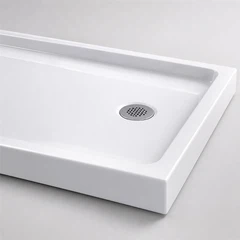



In modern bathroom design, acrylic bathtubs are highly favored by users for their fashionable shapes, good durability and easy maintenance. For users who pursue high cost performance and installation convenience, being familiar with the production process from raw material molding to finished product packaging, especially when choosing conventional sizes such as standard bathtub size, will help to more scientifically select high-quality bathtub products that meet their needs.
For ordinary consumers, they may only pay attention to the shape of the bathtub and whether the tub drain is smooth. But in fact, the birth of a high-quality acrylic bathtub requires going through dozens of precise processes. From the selection of raw materials to the final quality inspection, each link directly affects the service life and comfort of the product.
This article will take you on a deep exploration of the complete manufacturing process of acrylic bathtubs and analyze how key techniques ensure the outstanding performance of the products. Whether you are a consumer planning to purchase a new bathtub or an industry insider hoping to optimize your production process, this knowledge will provide you with practical value.
1. Raw material preparation: Selection of high-quality acrylic sheets
Entering the production workshop of acrylic bathtubs, you will find that its "skeleton" is actually a special plastic called PMMA, which insiders all call acrylic sheet. This material is no ordinary one. It can withstand temperature changes and daily bumps, and its surface can still maintain a mirror-like luster. It is simply tailor-made for bathtubs.
Workers will precisely cut large acrylic sheets like tailors cutting cloth according to common standard bathtub sizes (such as 60 inches ×30 inches or 72 inches ×36 inches). Then these boards need to enter the "sauna room" - in an oven at around 160℃, they gradually soften and become as flexible as dough, so that they can proceed to the next step of shaping.
2. Vacuum forming: shaping the basic shape of the bathtub
The forming of acrylic bathtubs mainly adopts vacuum forming process to ensure the smooth and flawless surface of the bathtub.
Mold preparation: Design the mold according to the type of bathtub (such as alcove tub or insulated freestanding tub).
Forming: The softened acrylic sheet is placed on the mold and fits the mold shape through vacuum adsorption.
Cooling and shaping: The formed bathtub maintains a stable structure after cooling.
3. Reinforcement and support: Enhance the durability of the bathtub
Although pure acrylic material is beautiful, its strength is limited, so it needs to be reinforced on the back.
Fiberglass reinforcement: Spray resin and lay fiberglass on the back of the bathtub to improve its pressure resistance.
Frame installation: Some bathtubs (such as high-end models with bathtub fixtures) will be installed with metal or wooden support frames to ensure that they will not deform after long-term use.
4. Edge trimming and drilling: perfect the functionality of the bathtub
The formed bathtub needs to be finely processed to ensure its complete functionality.
Cutting edges: remove excess material to make the bathtub edge smooth and flat.
Installation holes: reserve holes for tub drain and bathtub drain stopper to ensure the normal operation of the drainage system.
5. Surface treatment: Improve aesthetics and protection performance
The surface treatment of acrylic bathtubs is crucial and directly affects their service life and visual effects.
Polishing and grinding: Use high-grit sandpaper to polish the bathtub surface to give it a mirror effect.
Special coating: Some brands will apply a scratch-resistant coating, and DIY users can also use bathtub paint for renovation.
6. Quality inspection and packaging: ensure that the product meets the standards
Before leaving the factory, each acrylic bathtub must undergo rigorous testing.
Water leakage test: check whether the bathtub drain is well sealed.
Load-bearing test: simulate daily use to ensure that the bathtub structure is stable.
Packaging protection: use foam and cartons to properly package to avoid transportation damage.
Conclusion:
The production process of acrylic bathtubs combines material science and precision manufacturing technology, and it goes through many complex processes from raw materials to finished products. Whether it is an alcove tub or an insulated freestanding tub, high-quality acrylic bathtubs can bring consumers a comfortable and long-lasting bathing experience. I hope this article can help you understand the manufacturing process of this bathroom product more deeply and make a more informed decision when purchasing.
For more information about standard bathtub size or bathtub fixtures, please continue to pay attention to our professional bathroom guide!


