





If you are searching for just how to change a bathtub faucet, the first thing to understand is this: in several homes, the job is truly a tub spout or trim replacement on existing plumbing, not a complete rough-in installment behind the wall surface. That variation is far more DIY-friendly. A full setup that entails a new valve body, new deck holes, or relocating supply lines is a various level of work and is typically much better delegated a licensed plumber.
That is why the most intelligent method to come close to a bathtub faucet task is to determine the faucet kind first, gather the right tools, and then follow the appropriate installment course. Wall-mount, deck-mount, and floor-mount bathtub tap systems do not set up the same way, and even 2 wall spouts can make use of different link approaches.
What "Setting Up a bathtub faucet" normally suggests
|
Installation scenario |
What it usually involves |
DIY difficulty |
|
Slip-on wall surface spout |
Replacing the visible bathtub spout on an existing pipe |
Easy |
|
Threaded wall spout |
Setting up a tap via holes in the tub edge or adjacent deck |
Easy to moderate |
|
Deck-mounted tub faucet |
Setting up a faucet through holes in the tub rim or adjacent deck |
Moderate to advanced |
|
New in-wall valve or floor-mounted filler |
Plumbing changes behind the wall surface or listed below the floor |
Professional advised |
This distinction issues due to the fact that property owners commonly use "set up bathtub faucet" to explain both a standard replacement and a more advanced component installment. Clearing up the difference early aids readers pick the right directions and reduces the risk of buying incompatible parts.
Recognize your bathtub faucet type before you begin
Before you buy parts or pick up a wrench, inspect what is already setted up.
A slip-on tub spout normally has a little set screw below the spout near the wall surface. If you see that screw, the spout slides onto a smooth pipe and locks in location with an Allen secret.
A threaded bathtub spout normally has no visible collection screw. It screws onto a threaded pipeline nipple, so removal is generally done by turning the spout counterclockwise.
A deck-mounted tub tap mounts through a ledge on or beside the bathtub. It prevails on drop-in baths, under-mount installations, and some freestanding bath tub layouts with a suitable deck area.
A wall-mounted complete faucet collection or a floor-mounted filler is generally chosen for a much more architectural appearance. These arrangements can look premium, yet installment is much more conscious rough-in setting, spout reach, ended up wall surface density, and alignment.

Tools and materials you might need
-
Flexible wrench
- Allen key or hex key
- Phillips screwdriver
- Flathead screwdriver
- PTFE / Teflon tape
- Energy knife
- Soft dustcloth or towel
- Tiny container
- Bathroom-grade silicone or caulk
- Flashlight
For a deck-mounted bathtub faucet, you might also need accessibility under the bathtub deck, mounting equipment, rubber washing machines, lock nuts, and the exact spacing or template required by the maker.
How to Change a bathtub faucet step by step
Step 1: Turn off the water and safeguard the bathtub
Switch off the primary water supply before you touch the bathtub faucet. After that open up the faucet briefly to alleviate stress and verify the water is really off. Area a towel in the bathtub to safeguard the finish and to quit tiny screws from disappearing right into the drainpipe. If you are mounting a new wall-mounted faucet body rather than just replacing the noticeable spout, flush the supply lines before last assembly so dust and particles do not enter the new fixture.
Step 2: Remove the old bathtub faucet or spout
For a slip-on spout, score any kind of old caulk around the component, loosen the set screw below with an Allen trick, and glide the spout right off. For a threaded spout, transform the spout counterclockwise to remove it. If you are also changing deals with or trim, eliminate the decorative cap, loosen the manage, and take off the trim carefully. Once you relocate beyond aesthetic trim and into shutoff stem or shutoff body job, the task comes to be advanced.
Step 3: Clean and prepare the link
After the old bathtub faucet is off, clean away leftover caulk, mineral build-up, and debris. On slip-on installments, smooth any type of burrs on the pipe so the new spout seats effectively. On threaded setups, evaluate the threads carefully and use fresh PTFE tape if your new tap requires it. This prep stage is where lots of leakage troubles either begin or get protected against.
Step 4: Set up the new faucet
For a new slip-on bathtub spout, straighten the spout with the pipe, press it completely into area, and tighten the set screw according to the item directions. For a new threaded spout, cover PTFE tape in the appropriate direction if required, then thread the spout on by hand till snug and straightened. For a deck-mounted tub faucet, set up the faucet body and deals with via the prepared holes, then protect them from below with the right washing machines and lock nuts. Do not assume one deck-mounted tub faucet sets up like one more; constantly adhere to the model-specific guide.
Step 5: Seal, test, and examine for leaks
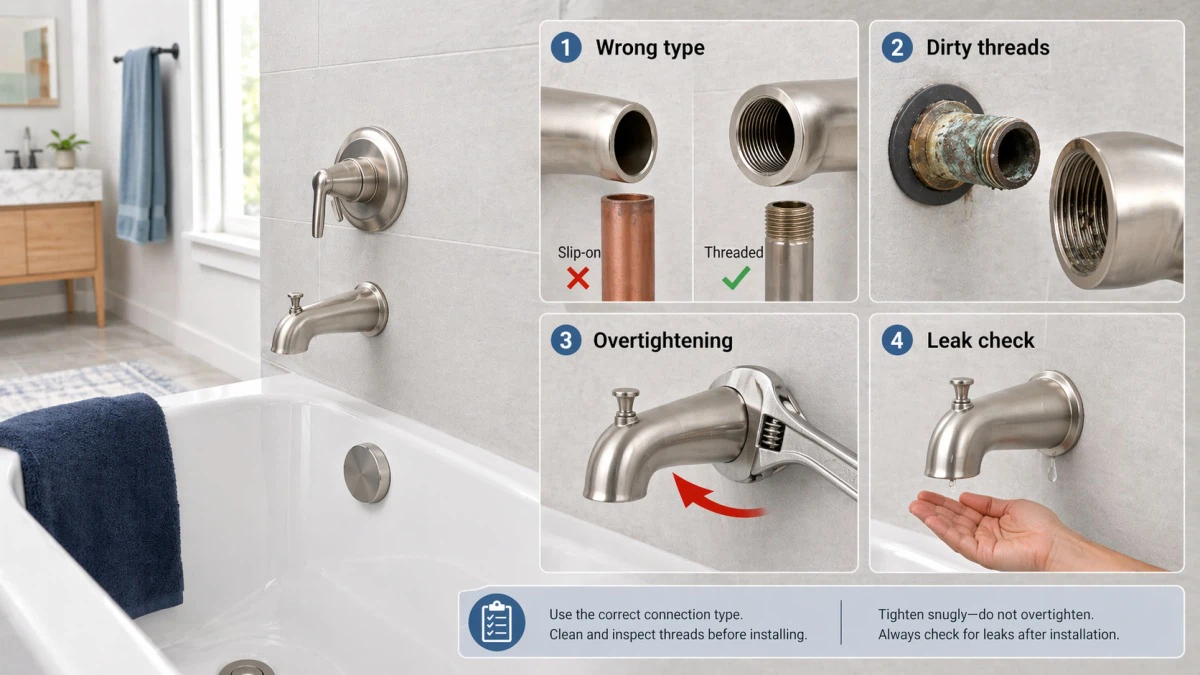
Once the brand-new bathtub faucet is mounted, recover the water slowly and evaluate every noticeable link. Allow water run quickly to validate consistent circulation and to purge any type of remaining debris. After that examine around the wall surface, spout base, handles, hose links, and access points for drips. If your installment asks for exterior sealing, use a neat bead of bathroom-grade silicone only where appropriate. Some settings up depend on gaskets or O-rings, so do not secure every space by behavior.
Typical bathtub faucet installation mistakes to avoid
-
Buying the wrong connection kind. A slip-on spout and a threaded spout are not interchangeable.
- Skipping line flushing or surface preparation before setting up the new component.
- Overtightening decorative parts and damaging the finish, gasket, or strings.
- Treating a rough-in plumbing job like a straightforward visible-faucet swap.
- Disregarding product-specific spacing, trim-depth, or mounting requirements on deck-mounted and wall-mounted systems.
When you should call a plumbing professional
-
You need to open the wall to replace the valve body.
- The job entails drilling a new deck for a bathtub faucet.
- Supply lines need to be relocated or reconfigured.
- The pipe nipple inside the wall surface is loose or rusty.
- You find persistent leaks after correct settup.
- A freestanding floor-mounted tub filler requires below-floor rough-in work.
Conclusion
The safest way to set up a bathtub faucet is to treat it as a fit-and-connection trouble initially, not just a hardware swap. Determine whether your tub makes use of a slip-on spout, threaded spout, deck-mounted faucet, or a more intricate wall surface- or floor-mounted system. As soon as you know the type, the remainder of the task ends up being much more clear: shut down water, eliminate the old fixture meticulously, prepare the link appropriately, set up the new part without requiring it, and examination for leaks prior to you call the task completed.
If your project also includes selecting a new free standing tub, MESA uses acrylic freestanding bathtub options and a devoted call web page for item or project queries.
FAQ
Can I change a bathtub faucet myself?
Yes, if you are replacing a noticeable slip-on or threaded bathtub spout on existing pipes, lots of house owners can take care of the work. If the job includes a brand-new valve body, deck exploration, or moving supply lines, it is safer to utilize a certified plumbing professional.
How do I know if my bathtub faucet is slip-on or threaded?
Look beneath the spout near the wall surface. If you see an established screw, it is generally a slip-on spout. If there is no set screw, it is normally threaded.
Do I need to turn off the main water supply first?
Yes. Turn off the main water supply prior to beginning, then open the facuet briefly to launch stress and verify the line is no longer live.
What tape should I make use of on a threaded bathtub faucet?
A lot of threaded bathtub faucet sets up usage PTFE string seal tape if the supplier requires it. Always examine the design directions, since some sealing factors make use of gaskets or washing machines rather.
Why is my new bathtub faucet leaking after installation?
Typical reasons consist of the incorrect faucet type, damaged strings, poor surface preparation, debris in the line, loose fittings, or wrong securing. Beginning by verifying the connection style and inspecting every joint very carefully.
Can any bathtub use a deck-mounted faucet?
No. Deck-mounted faucets need a compatible step or deck area and the correct mounting-hole layout. They prevail on drop-in and under-mount tubs and some freestanding tubs, but not every one of them.
Should hot water be on the left and cold on the right?
Yes. That is the standard orientation for the majority of bathtub faucet installations. If those lines are reversed, fix the pipes before settling the mount.
When should I quit and call a plumber?
Stop if the pipe inside the wall actions, the old spout will not come off easily, the new faucet does not match the rough-in, or you find a leakage that does not solve after proper tightening up and securing.


