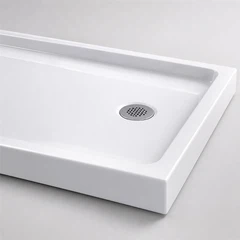




You've worked all week, and it is time to clean your house; this includes your acrylic tub, which is home to only thousands of bacteria! If you don't want to go bathing with your little friends, here's a guide to help you clean your tub.
These are the essential steps to cleaning an acrylic tub:
1. Dampen a cloth or sponge and wipe the tub.
2. Sprinkle a cup of baking soda and two spoons of mild dish detergent in the tub.
3. Scrub with a damp sponge. Lightly scrub a toothbrush for hard stains or edges.
4. Rinse the tub with water.
Bathtubs can get different stains; sometimes, one cleaning solution won't apply to all. In the following sections, I have listed more detailed instructions on how to get your tub back to its gleaming state, plus some additional tips!
First And Foremost, What Do You Need?
Before cleaning, you should prepare the stuff needed. These are easy to find. Some of these can already be found around your house or in your local hardware. The necessary materials are as follows:
● Baking Soda
● White Vinegar
● Liquid dish detergent
● Hydrogen Peroxide
● Borax Powder
● Microfiber towel or any non-abrasive cloth
● Toothbrush
● Spray Bottle
The materials and supplies needed to clean your bath should not be abrasive, as this will lead to further damage.
What Cleaning Products to Avoid
There are chemicals and cleaners you may want to avoid if you wish your tub's surface to be smooth. Acrylic can be easily scratched, especially with abrasive cleaners, so keep away from these.
The list of chemicals and products you should avoid are:
● scouring pads
● steel wool
● course brushes
● bleach
● solvents
How to Remove Acrylic Tub Stains
If you own an acrylic tub, expect it to accumulate stains over time. It can range from mild to hard stains. Taking care of your tub will prolong its life span and give you less effort to do frequent maintenance.
To help you with your problem, I will talk about how to remove different stains that your acrylic tub may encounter.
1. Removing Mild Stains
First are the basic stains that result from daily use and are the ones you'll usually see after a week or two of not cleaning the tub. There are two ways you can clean mild stains.
The first way to clean a mild stain is using baking soda and dish detergent. Baking soda is a good cleaning agent used for many home purposes. Aside from cooking, baking soda absorbs odors and extinguishes small kitchen fires.
These are the following steps to remove mild stains using baking soda and liquid detergent:
● Prepare a cup of baking soda and 2 to 3 tablespoons of mild dish detergent.
● Using a damp sponge or cloth, preferably a microfiber towel, wipe the tub to ensure the baking soda will stick in place and reduce the friction upon scrubbing.
● Sprinkle the baking soda all over the tub and add the mild detergent after. You can use any dish detergent as long as it is gentle and does not contain any abrasive chemicals.
● Use a damp sponge to scrub the tub. Make sure you use the soft part of the sponge if it is a double-sided sponge with a rough side. The baking soda already acts as a mild coarse cleaner, and adding another won't be very good.
● To clean the corners or any minor stains the sponge can't remove, use a toothbrush and gently scrub in a circular motion.
● Also, don't forget to include your faucet when cleaning your tub! Because needless to say, you also touch it every time you take a bath.
● If you feel that every inch of your tub is clean, you can start rinsing with warm water while continuing to scrub. You can use a dipper when you don't have a removable shower head.
● After rinsing, grab a dry towel and wipe the surface of your acrylic tub. It is to prevent any unpleasant soap scums from forming. You don't want any white stains on your tub surface, don't you?
The second way to remove mild stains is by using three ingredients. These are vinegar, water, and dish detergent. It's just as easy as the first step and involves mixing and, of course, scrubbing.
Just like baking soda, vinegar also serves a purpose for cleaning countertops, floors, and laundry. The vinegar's acidity helps in dissolving grime, grease, and dirt. It is cheap, natural, and nontoxic, benefitting you and the environment.
Vinegar and dish soap are both great cleaning agents. Mixing them creates a balance since vinegar is acidic and dish soap is a neutral to mild alkaline cleaner.
I have listed the steps you need to follow for the second option of cleaning mild stains.
● Start by pouring vinegar and water in equal parts into a spray bottle.
● Add two tablespoons of dish detergent and shake to mix.
● Spray the mixture all over the tub generously until all surfaces are covered. Let it sit for about 15 minutes before you proceed to scrub.
● Wet your sponge and scrub the tub's surface with the coarse side. Clean thoroughly the areas that collect most of the dirt around the sink. Don't forget to include the outside of the tub, as it will build up soap scums and hard water stains if not maintained.
● Ensure you have removed all visible stains before rinsing them with warm water.
● Lastly, wipe the surface with a dry towel.
I have shown you two ways to clean mild stains in your bathtub. You can also do this frequently for your tub's overall cleaning. You can choose what method you like depending on your available materials.
If the stains are still not removed, don't try scrubbing them too hard; this may lead to noticeable scratching. It may be another kind of stain and needs a different cleaning process. You could try doing the following method.
2. Removing Tough Stains
This method may remove stains left from the previous cleaning process. The products you will need are hydrogen peroxide and baking soda.
Hydrogen peroxide available in pharmacies are usually colorless similar to water. It is an antiseptic used to cleanse wounds, burns, and scrapes. Aside from this, the solution also serves as a disinfectant and stain removal for surfaces.
Removing tough stains can be a hassle, so here are steps to solve this problem:
● Create a paste by mixing baking soda with hydrogen peroxide in a one-to-two ratio.
● Apply the mixture to the tough stains and leave it for about 40 minutes. You can use a rubber glove for an easier and more accurate application.
● Lightly rub the surface with a soft sponge. If you want to be sure, leave the surface with the solution for a few minutes after rubbing.
● Remove and wash off with warm water.
● Repeat the process if necessary.
You may also loosen the hard stains before rubbing by spraying or filling the tub with vinegar and hot water. Tough stains may result from mild stains that have sat for a long time, so you should remove the stain right away to avoid more challenging problems.
3. Removing Hard Water Stains
Bathtubs are prone to hard water stains. These stains occur from unwiped water evaporating and leaving the minerals behind after using the tub. It is a common problem, especially for people who forget to dry the tub after a bath.
For this procedure, you will still use vinegar. At this point, we can tell that vinegar can be an all-around cleaner!
● You can start by drenching paper towels in a cup of vinegar.
● Place the paper towels on areas with water stains and leave for an hour or two.
● Remove the towels and make a vinegar and baking soda paste with a similar ratio in step two.
● Apply the paste over the area where the paper towels are placed and leave it for a few minutes.
● Scrub the areas with the paste using a sponge. Do it in circular motions and remove it after.
● Finish by washing with water and wiping with a towel dry.
Water stains that have settled for too long may be harder to remove and should require repeated removal, so it is better to avoid them early.
Here is another product and method you can try to remove hard water stains:
You can try finding a water stain remover from your local hardware or online if there are remaining water stains. And if you purchase one, choose those that are meant or safe for acrylic tubs. Although you should take note that using natural solutions is safer and cheaper.
4. Removing Rust Stains
You may wonder why rusts form in your acrylic tub even though it is a plastic material. The water sources such as lakes and groundwater contain iron, which may oxidize in your pipes. All of this gets carried in the water and contribute to the rusting of your tub's surface.
Rust marks can be the most unsightly stain in your acrylic tub, especially with a white-colored tub. The borax powder comes into play and is an essential ingredient for this procedure.
Borax is a natural compound that is powerful in removing rust. It can also solve rusting problems for farm materials and other metal surfaces.
Rust stains lessen your bathing quality. Follow these steps if you want to bring back the smooth surface of your tub:
● Mix one part of borax powder, two parts water, and a dash of vinegar. You can also try lemon juice as a substitute for vinegar.
● Spread the paste over the rusted area and wait about 15 to 25 minutes.
● Use a sponge and rub the area. If the stain is slightly hard to remove, you can use a toothbrush, but remember to use it gently.
● When done, rinse off with water and repeat the procedure if necessary.
The following video gives a better idea of how to do this procedure:
You don't want to overdo repeating each process when you have not successfully removed the stain on the initial try. Learn when to stop to avoid further scratches and damage to your tub.
Removing each kind of stain is easy as long as you have the suitable materials and agents. Natural cleaners are also recommended rather than store-bought solutions that may contain harsh compounds.
Reminders
There are things you need to take note of before and after cleaning your acrylic tub. These are equally important as the listed steps above, so you may want to consider reading before grabbing your cleaning tools.
● Do not randomly mix different compounds. Doing so may create a chemical reaction that will generate harmful compounds that can damage your tub or release fumes that are not safe for inhaling. The listed combinations are safe to use.
● Test the solution in a small hidden area, which can be inside the tub walls. You can see if the one you use is safe and doesn't lead to discoloration. You may also test out how much force you need to scrub before creating a noticeable scratch.
● Make sure to open your doors and windows to have a well-ventilated area. Vinegar and other solutions may smell.
● Wear rubber gloves to avoid drying and flaking your hands.
● When working with chemicals like hydrogen peroxide, wear clothes you don't mind getting stained and discolored.
● Apart from the mentioned natural cleaners, there are other products that you can use which are safe as well. These are shampoo, lemon, laundry detergent, and cream of tartar.
● To minimize the rising of stains in your tub, always wipe it after every use. Drying will reduce water stains and possibly, rust stains.
● If you are a meticulous person worried about stains, you may want to avoid adding colored essential oils and doing your hair color in your tub to prevent color stains.
The Verdict
Essential home products, such as vinegar, baking soda, and liquid detergent, are enough to clean most of the basic stains in your tub. However, a rust stain may need the help of borax. Some spots may also be harder to remove if they stay too long in your tub.