






Find the perfect bathtub size for your dream bathroom with our 2025 guide.
In the actual renovation process, we often experience delays due to a simple issue: size. You might have chosen a beautiful bathtub, but if its size doesn't fit the bathroom space, it can make installation much more complicated.
Many of our customers ask us, "How do I choose a standard-sized bathtub?" Interestingly, these questions often arise when customers realize during installation that their initial choice wasn't suitable.
In this comprehensive guide, we will explore standard bathtub dimensions for every style, how material affects internal space, and the technical details you need to know before making a purchase from Mesa Shower.
1. Quick Reference: Bathtub Dimensions Comparison Chart
Before diving into the details, use this chart for a high-level overview of common industry standards.
|
Tub Type |
Standard Length |
Standard Width |
Standard Height |
Best Use Case |
|
Alcove bathtub |
60 inches |
30-32 inches |
14-16" inches |
Apartments & Guest Baths |
|
Freestanding bathtub |
55-72 inches |
27-32 inches |
24-30 inches |
Master Suites / Focal Point |
|
Corner bathtub |
60 inches |
60 inches |
18-20 inches |
Large Square Bathrooms |
|
Drop-In Tub |
45-72 inches |
30-42 inches |
14-20 inches |
Custom Decks / Surrounds |
|
Soaking bathtub |
60-72 inches |
30-36 inches |
25-34 inches |
Deep Relaxation |
|
Walk-in bathtub |
48-60 inches |
28-32 inches |
38-40 inches |
Accessibility & Seniors |

2. Deep Dive: Understanding Each Tub Category
A. Alcove Bathtubs:The Universal Standard
The alcove tub is the backbone of urban bathroom design. Installed between three walls, it's designed to save space.
The 60-inch Rule: The most common length is 60 inches because it matches standard construction framing in many countries.
Width Considerations: While 30 inches is the "standard," upgrading to a 32-inch or 34-inch alcove tub offers significantly more elbow room without changing the overall footprint of the bathroom much.
Apron Height: Standard aprons are 14–16 inches high, which is ideal for families with children (easier to reach in).
B. Freestanding Bathtubs: A perfect combination of aesthetics and practicality.
As the name suggests, a freestanding bathtub emphasizes independence; it doesn't need to be installed against a wall, allowing you to place it wherever you want. This offers greater flexibility, but also requires careful planning of the surrounding floor space.
· Small (50" - 55"): Perfect for "tiny home" luxury or small secondary bathrooms.
· Standard (60"): This is a standard size for a freestanding bathtub, and it's the most popular choice for many households. It offers excellent comfort and balance.
· Large (66" - 72"):If you are tall and a standard-sized bathtub doesn't allow you to truly relax, then you need this large bathtub to meet your needs and experience the true pleasure of soaking.
Although there are different bathtub sizes to choose from, I recommend that you consider daily cleaning and maintenance regardless of the size. Try to leave 4-6 inches of space between the bathtub and the walls or surrounding objects. I believe you'll thank me for this advice later!
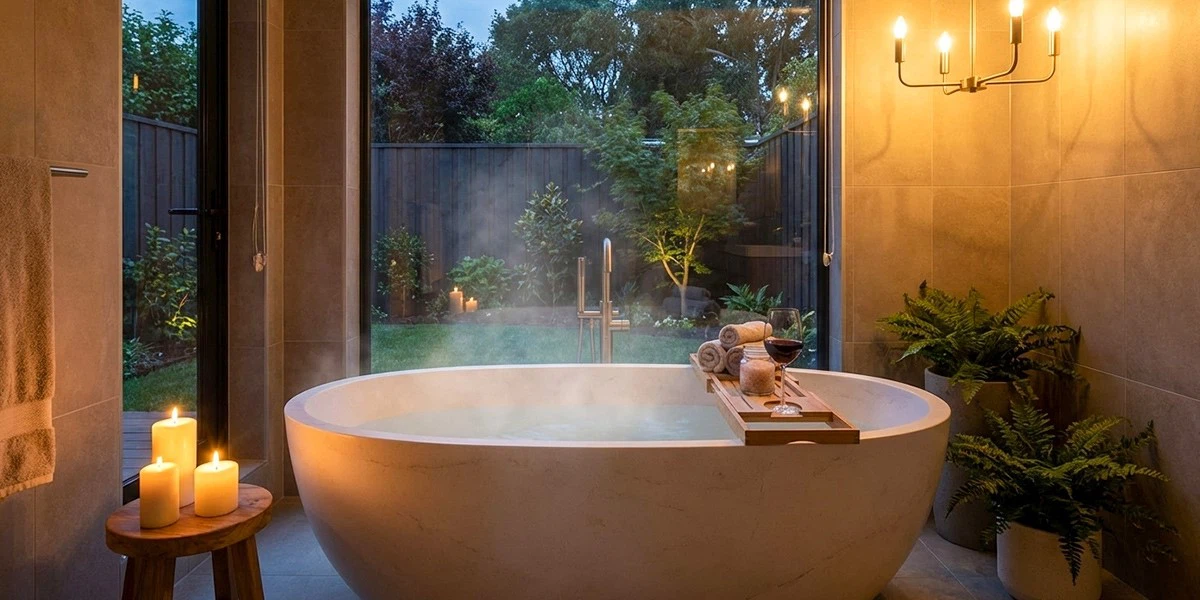
C. Drop-In Tubs: The Architect's Choice
A drop-in bathtub is essentially a bathtub shell that can be "embedded" into a custom-built frame or platform, concealing the external structure and allowing the bathtub to blend seamlessly with the overall bathroom style.
The Lip (Rim): When measuring, remember that the "dimensions" usually refer to the outer rim. The actual bathing well is smaller.
Customization: Because you build the deck, you can choose a wider rim (up to 42 inches) to create a ledge for candles, wine, or bath products.
D.Corner Bathtub: The King of Corners
Imagine this: regardless of whether your bathroom space is limited or irregularly shaped, there's always a corner, right? A corner bathtub with a triangular or wedge-shaped design can be perfectly installed there. Many models feature a spacious and deep soaking area, and some can even accommodate two people at the same time.
Standard corner bathtubs typically have sides that are approximately 60 inches long. The height is 20-24 inches. It's important to note that the diagonal design may take up more space than expected, so you need to plan the plumbing and connections in advance.
E.Walk-in bathtub: "An expression of love"
For the elderly and people with mobility issues, walk-in bathtubs are designed with their needs in mind. Their overall design is relatively low, and they feature a waterproof door at the entrance. The low threshold makes them particularly user-friendly for these individuals. Many models comply with the guidelines of the Americans with Disabilities Act (ADA) and are equipped with conveniently placed handles, operating systems, and seats.
Most walk-in bathtubs are between 48 and 60 inches long and 28 to 32 inches wide. Installation may require minor modifications to the plumbing depending on the model.
3. How Material Influences Your Space
When looking at dimensions, don't forget the thickness of the walls. The material you choose at Mesa Shower affects the "Internal vs. External" space.
A.Acrylic & Fiberglass: These are relatively thin (approx. 1 inch). An acrylic tub often provides the largest internal bathing area for its external footprint.
B.Cast Iron: These tubs have thick, heavy walls (2+ inches). A 60-inch cast iron tub will feel much narrower inside than a 60-inch acrylic tub.
C.Stone Resin: This material allows for incredibly sharp, thin edges, giving a modern look and maximizing every millimeter of soaking space.

4. Measuring Like a Professional (Step-by-Step)
Don't trust your eyes; trust your tape measure. Follow these three critical steps:
Step 1: Wall-to-Wall (The Rough-In)
Measure the alcove space at three points: the floor, the middle, and the top of the tub line. Walls are rarely perfectly straight. Use the smallest measurement of the three as your guide.
Step 2: The "Clearance" Zone
If you are choosing a freestanding tub, mark its footprint on the floor using painter's tape. Can you still open the vanity drawers? Can the bathroom door swing fully open? Is there enough room to walk to the toilet?
Step 3: Plumbing Alignment
Check the drain location. Generally, bathtubs on the market have three drain locations: left, right, and center. So how do you determine which one you need?
Tip: You can determine the location by facing the bathtub as you would when you're about to take a bath. If the drain is on the left, the pipe should be installed on the left; if it's on the right, install it on the right.
5. Choose the size according to your needs
· Regular users: All bathtub sizes are available.
· Tall users: Choose extra-large bathtubs of 72 inches or more. Ideally, the overflow drain should be higher than the main drain to prevent water from overflowing when you lie down.
· For the elderly and those with mobility issues: Choose a walk-in bathtub.
· For couples: If you need a two-person bathtub, the drain opening in the center of the tub should be at least 36 to 42 inches wide to prevent your knees from bumping into each other.
6. Frequently Asked Questions (FAQ)
Q: Will a 60-inch tub fit exactly in a 60-inch space?
A: Usually, yes. However, if the space is 59.5 inches due to thick tile or uneven walls, you will struggle. Always measure the "rough-in" (the studs) before tiling.
Q: What is the most comfortable bathtub height?
A: For easy entry and exit, 14–16 inches is best. For deep soaking, you'll want 20 inches or more.
Q: How much weight does a standard tub add to the floor?
A: A standard 60-inch tub filled with water and a person can weigh over 800 lbs. Always ensure your floor joists are up to the task, especially for cast iron or stone models.
Our conclusion:
Size is fundamental to creating a comfortable bathroom. Choosing the right bathtub requires understanding standard sizes and how to measure, ensuring a perfect fit for your bathroom space.
From the manufacturer's perspective, accurately measuring dimensions, understanding the characteristics of different materials, and planning for installation issues before placing an order can prevent most sizing problems.
Whether you're considering a simple built-in bathtub or a beautiful and luxurious freestanding or walk-in tub, we have it all at Mesa Shower.
View Mesa Shower Bathtub Collection


